|
Colt Firearms Collector |
1930
San Francisco, California
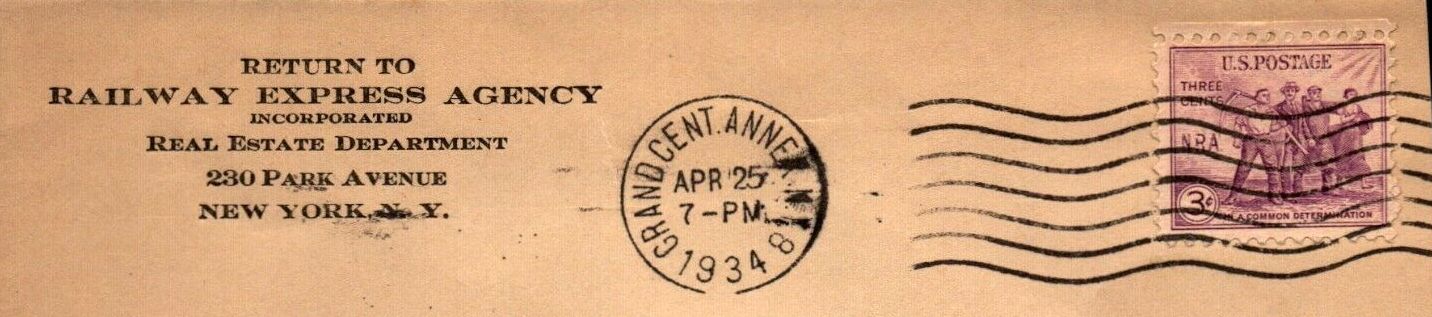
1934 envelope
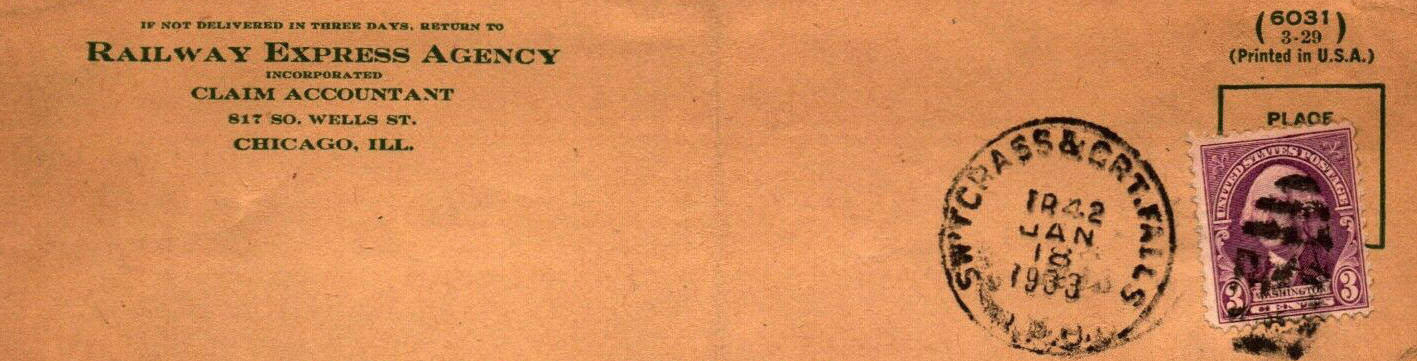
1938 envelope
| By 1900, four principal express parcel
businesses that used the existing railroad structure operated in
competition with each other. During World War I seven express
companies were consolidated as the United States Railroad
Administration (USRA). However, in the South the Southern Railroad
system was excluded from the nationalization of the system. In 1929 the Railway Express Agency (REA) was created by combining three companies into one freight railway entity. The REA had a monopoly and unique setup whereby it was the sole express business to move goods via rail and the railroads transported freight cars. The REA shipped a wide variety of products including animals, hazardous materials, explosives, and even fruits and vegetables. The most profitable period for the REA was World War II but the railroad industry in general began to diminish after the war. With increased competition from Federal Express in the late 1950?s, the REA continued to have financial difficulties. |
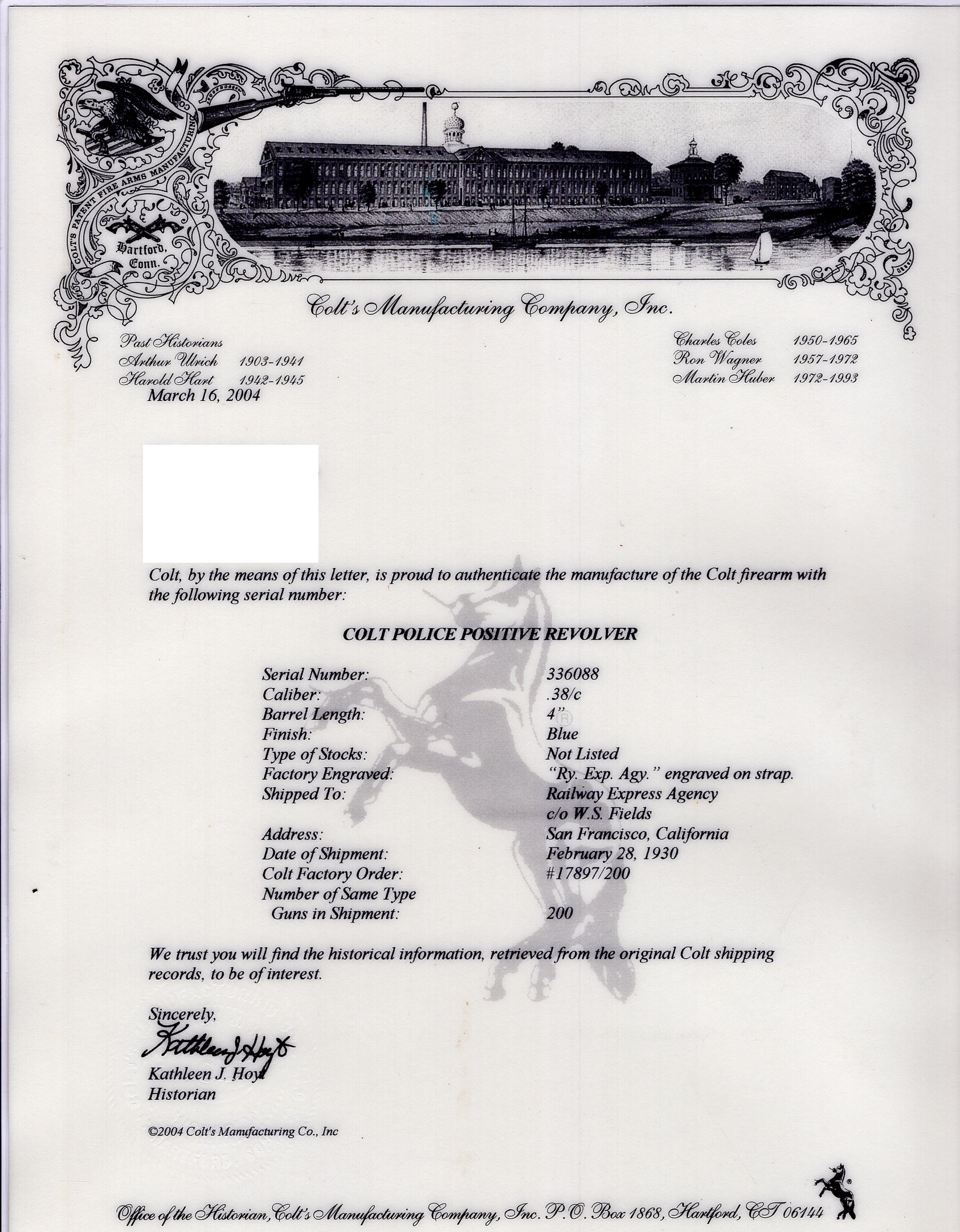
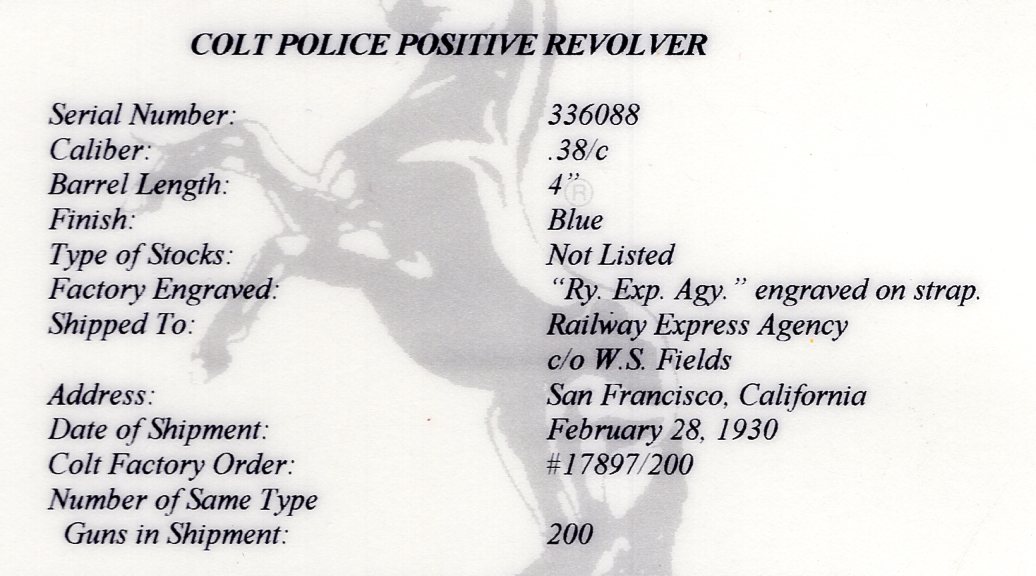
This Colt Police Positive RY EX AGY marked revolver
was delivered to the San Francisco Agency in 1930


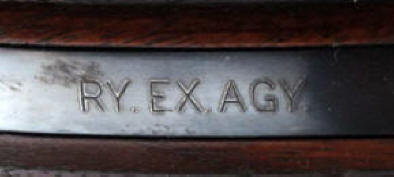
'Railway Express Agency' engraving on backstrap of handle
|
|
|
Colt factory archive letter
For the best experience, please view this Colt website
with a format larger than a cell phone