GeorgeTiemann Finnel's Post-Mortem Surgical Set, c.1860
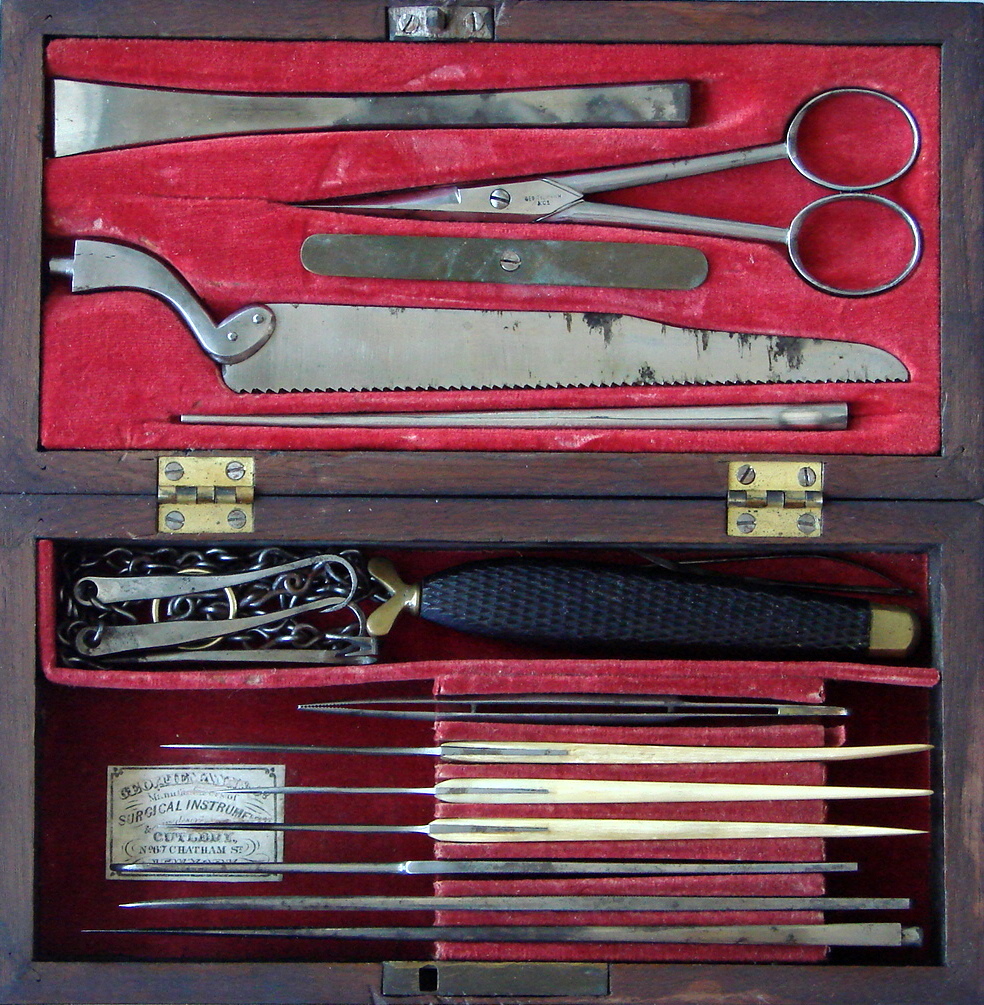
An 1860 Finnell's post-mortem set by George Tiemann & Co., New York. This set could easily have been in use during the Civil War and certainly shows use due to blood stains left on the saw and large knife blade.
Tiemann was at the 63 Chatham address prior to and during the Civil War until 1864. The white background label in this set is the earlier version from that period. Tiemann instruments in 1860-61 amputation sets
Tiemann & Co. 1855-63/64: 63 Chatham and 44 Eldridge.
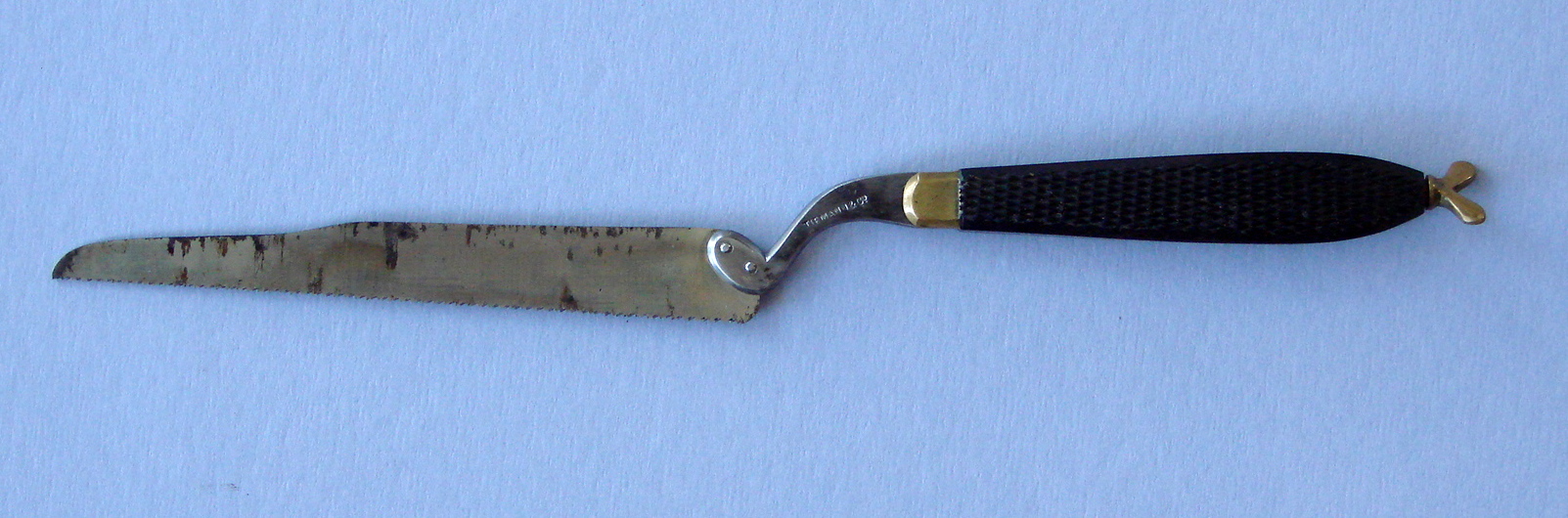
The Rosewood case measures (7 7/8 x 4 x 1 5/8 in.) with a red velvet lining. There is not engraving on the brass name plate. The case is keyed. There is a removable cross-hatched ebony and brass handle with a saw and large knife which attach by a threaded screw in the handle. The ferrule of the handle is exactly like those seen on 1860 amputation knives, serving to help date the set the the 1860 range.
Rosewood case
Tiemann maker label: No. 63 Chatham St.
Instrument list from Tiemann's c.1870's catalog: A Finnell's Post Mortem Set, PRICE $12.50
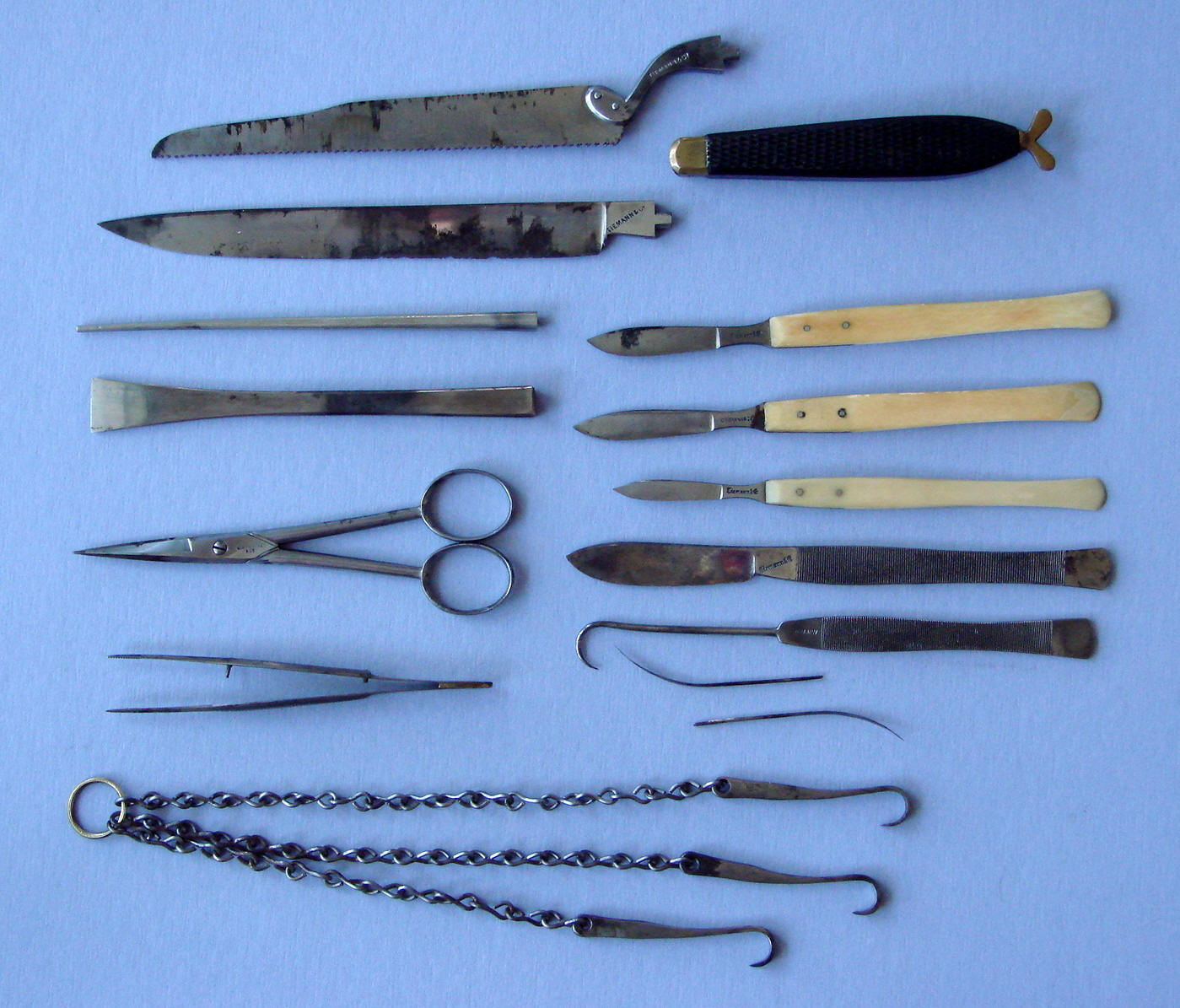
1. Amputating Knife; 2. With Saw; 3. Handle to fit the above; 4. (3) Ebony Handle Scalpels assorted; 4. Steel Handle Cartilage Knife; 5. pair of Straight Dissecting Scissors; 6. Ebony or Steel Handle Tenaculeum; 7. set of Heavy Chain Hook; 8. German Silver Blowpipe; 9. pair of Dissecting Forceps;10. (2) Needles and Thread; 11. Chisel; 12. Rosewood Case with lock and key lined with velvet
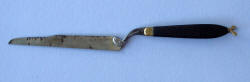
Post-mortem saw (With removable handle) Post-mortem knife
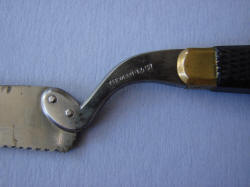
Dating note: the brass ferrule on the handle is exactly like those used by Tiemann on instruments in their 1860-61 amputation sets
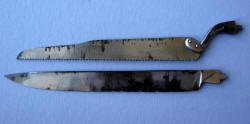
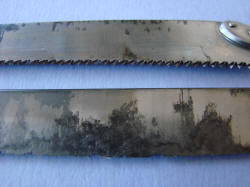
The knife and saw metal is blood-stained from the salt-content in blood
Dissection scissors, German silver blow-pipe, bone chisel
Blow pipe used to inflate vessels for tracing origins
Dissection scissor
Dissection tweezer
(3) Ivory handled: scalpels
(2) Steel handled: cartilage knife and tenaculeum
Heavy retraction chain hooks
Side-cutting suture needles for sewing up the body after dissection